- US- Iran War Resupply Conflict
- Gasoline Prices Continuing to Rise Sharply
- Rising Fuel Prices Impact Air Cargo
- UAE Leaving OPEC
- DoorDash to Issue Relief Funds to Drivers
US, IRAN Growing Supply Lag
- Inventory normalization is expected to materially lag physical supply recovery.
- Distillate markets are likely to remain structurally tight through recovery phase.
Even under a constructive geopolitical resolution, inventory normalization is expected to lag the recovery in physical crude flows. While export volumes and refinery utilization could begin to improve within weeks of the reopening of the Strait of Hormuz, commercial stock rebuilding is likely to take multiple quarters. Distillate markets remain structurally tight, with pricing still reflecting risks around replenishment pace.
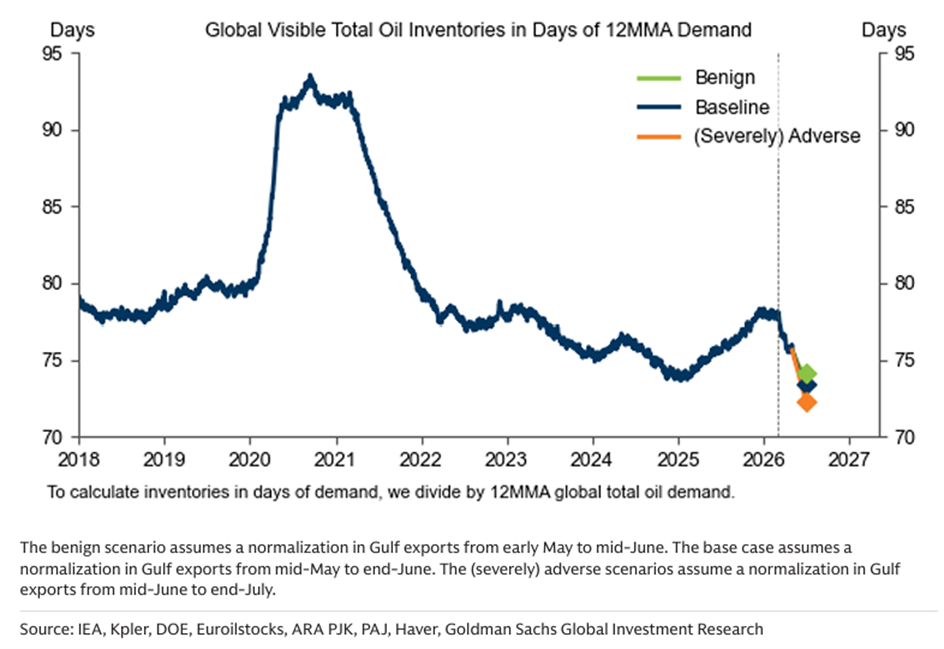
Middle distillates are expected to remain the tightest segment through the recovery period given already low global inventories entering the disruption. Gasoline balances may normalize more quickly alongside rising refinery throughput, but diesel and related products are likely to see a more extended recovery cycle.
Gasoline Prices Continuing to Rise
- Short-term gasoline pricing in Pennsylvania continues to be firm, reflecting consistent upward movement across recent periods.
- Year-over-year pricing differentials remain wide, highlighting a persistently elevated refined products environment.
Pennsylvania gasoline prices continue to show sustained upward momentum reflecting persistent strength in refined product markets. Prices are currently averaging approximately $0.29/gal above last week’s level and more than $0.50/gal above last month’s average.
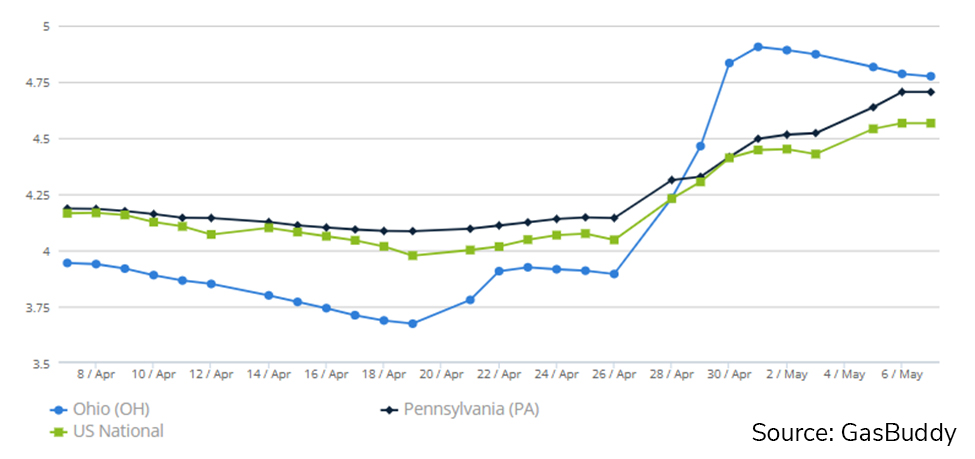
Gasoline prices remain approximately $1.30/gal higher than the same period last year, underscoring a structurally elevated pricing environment driven by higher crude benchmarks, seasonal demand support, and ongoing constraints in global refined product inventories.
Rising Fuel Prices and Fuel Surcharges to Impact Air Cargo
- Air cargo carriers are reinstating or raising fuel surcharges amid elevated jet fuel costs tied to geopolitical risk in the Middle East.
- Air freight pricing is becoming more dynamic, with tighter pass-through of fuel volatility into shipping rates.
Air cargo carriers are increasing or reintroducing fuel surcharges in response to higher jet fuel costs driven by disruption risks tied to the Iran conflict and associated pressure on Middle East supply routes. The adjustments reflect sustained input cost inflation, with carriers relying more heavily on surcharge mechanisms to pass through volatility rather than absorb margin compression.
This marks a continued shift toward more frequent repricing in air freight markets, as fuel costs remain highly reactive to geopolitical developments. As a result, pricing structures are becoming more dynamic, with tighter linkage between spot fuel movements and cargo rates, contributing to increased variability in shipping costs across global trade lanes.
UAE Leaving OPEC – May 1
- UAE exit marks a structural fracture in OPEC, weakening coordination among major producers.
- Market impact centers on spare capacity, pricing discipline, and long-term supply management.
The article frames the UAE’s departure as a meaningful structural setback for OPEC, weakening internal coordination among major producers. With one of the group’s key high-capacity members stepping away, OPEC’s ability to manage supply responses during periods of market stress is viewed as diminished, particularly in relation to spare capacity deployment and collective production discipline.
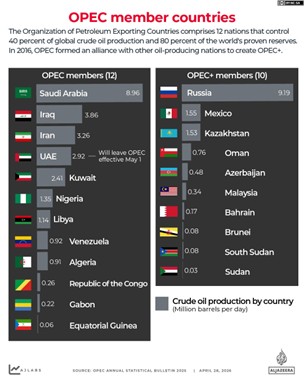
More broadly, the shift points toward a more fragmented global oil supply structure, where individual producer flexibility increasingly takes precedence over coordinated quotas. This raises uncertainty around OPEC+ cohesion and reduces the effectiveness of centralized supply management in influencing medium-term price stability.
DoorDash to Issue 50 Million In Relief Funds For Delivery Drivers
- DoorDash is increasing driver fuel support as gasoline prices rise sharply, with costs up ~44% year over year amid geopolitical tension.
- This marks a second consecutive quarter of fuel relief programs, highlighting persistent cost pressure on driver economics despite strong demand growth.
The AP reports that DoorDash is increasing driver support costs in response to sharply higher U.S. gasoline prices, which have risen about 44% year- over- year amid geopolitical tensions. The company expects to spend over $50 million in Q2 on temporary fuel relief programs in the U.S. and Canada to help offset higher operating costs for delivery drivers.
Despite higher fuel costs, DoorDash saw continued demand strength, with orders up 27% year over year. This marks the second consecutive quarter in which the company has implemented fuel-related driver support measures, underscoring the persistence of elevated input costs and the ongoing need to stabilize driver economics amid sustained volatility in gasoline prices.
Sources:
- Energy Information Administration (EIA)
- IEA
- Fox Business
- Trading Economics
- GasBuddy
- EnergyNow
- S&P Global
- AlJazeera