- US Oil Supply Cushion Falls to Multi-Decade Low
- OPEC+ Continues Production Increases Despite Ongoing Middle East Conflict
- China’s Oil Demand Slowdown Reshapes Global Markets
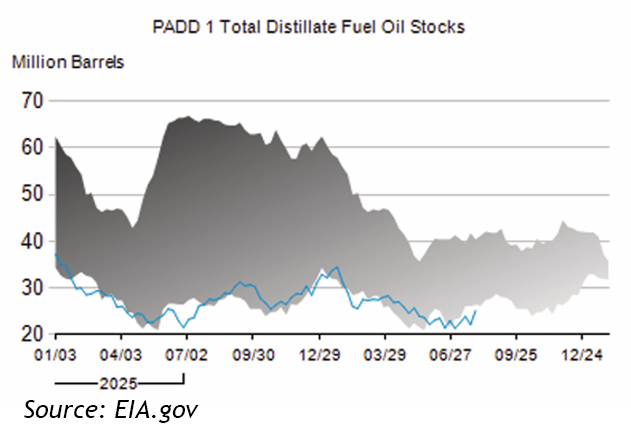
- East Coast Diesel Inventories Improve; however, Regional Supply Remains Historically Tight
US Oil Supply Cushion Falls to Multi-Decade Low
- US crude oil inventories and emergency reserves represent just 43 days of supply, the lowest level in roughly 45 years.
- The long-term average is approximately 65 days of supply, highlighting a significantly smaller buffer against unexpected disruptions.
- While recent crude prices have softened, lower inventory cover leaves the market more vulnerable to future supply shocks.
Current US crude stocks consist of roughly404.5 million barrels of commercial inventories and 307.7 million barrels held in the SPR, leaving total US crude stocks near 712 million barrels. The SPR remains near its lowest level since 1983, reducing the emergency cushion historically available during any major supply disruptions.
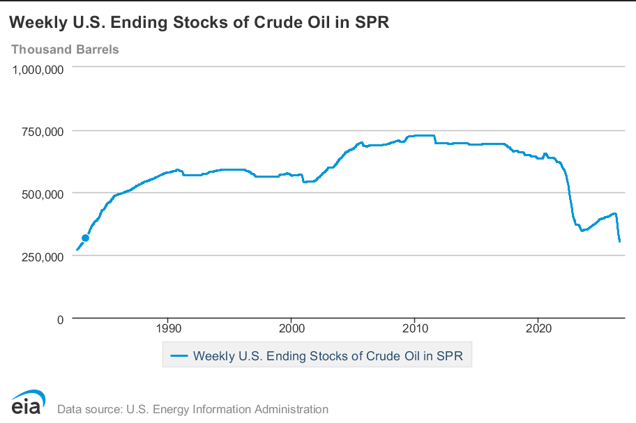
For fuel buyers, the concern is not an immediate shortage but a reduced margin for error. While the market has recently focused on improving supply expectations, US inventory cover remains historically thin. Any disruption from geopolitics, hurricanes or refinery maintenance could have a greater market impact than in periods of higher stock levels.
The contrast between improving supply sentiment and declining inventory cover remains noteworthy. Although crude prices have softened as concerns around Middle East supply have eased, US inventories continue to provide the smallest supply chain cushion in more than four decades.
Crude markets may be pricing in improving supply conditions, but inventory cover remains near a 45-year low. This leaves the market more vulnerable to unexpected supply disruptions heading into the peak of hurricane season and fall refinery maintenance.
OPEC+ Continues Production Increases Despite Ongoing Middle East Conflict
- OPEC+ agreed to increase production by 188,000 bpd in September, marking the sixth consecutive monthly output increase.
- The decision comes amid continued disruptions tied to the Iran conflict and restricted traffic through the Strait, highlighting OPEC+’s focus on maintaining supply availability and market stability.
While geopolitical tensions remain elevated, the market’s attention has increasingly shifted from supply disruption to supply growth. OPEC+ approved another 188,000 bpd of production for September, continuing its gradual return of withheld barrels to the market.
For crude markets, the decision reinforces a growing shift in sentiment. Earlier this year, fears of supply disruption were the primary driver of oil prices. Today, traders are increasingly focused on how much the additional supply may enter the market through higher OPEC+ production and the eventual normalization of Middle East exports. The result has been a gradual erosion of the geopolitical risk premium that supported prices during the height of the conflict.
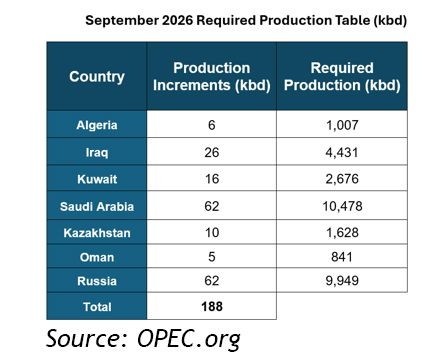
Recent price action reflects that shift, with WTI crude falling 10.5% and Brent crude declining 11.9% over the first two trading sessions of August as markets increasingly priced in additional global supply and the possibility of improved Middle East export flows.
China’s Oil Demand Slowdown Reshapes Global Markets
- China’s crude oil imports averaged just 8.1 million bpd in Q2, down roughly 32% from Q1 levels and well below the record import rates seen in 2025.
- The decline in Chinese imports has offset a significant portion of the supply disruption caused by tensions surrounding the Strait of Hormuz.
- Slower economic growth, increased EV adoption, and lower refinery demand are raising new questions about the long-term outlook for global crude demand.
China has long been the marginal demand driver in global crude markets, but recent import trends suggest that role may be changing. According to the EIA, Chinese crude imports averaged just 8.1 million bpd during Q2, a significant decline from the record import levels of 11.6 million bpd for 2025.
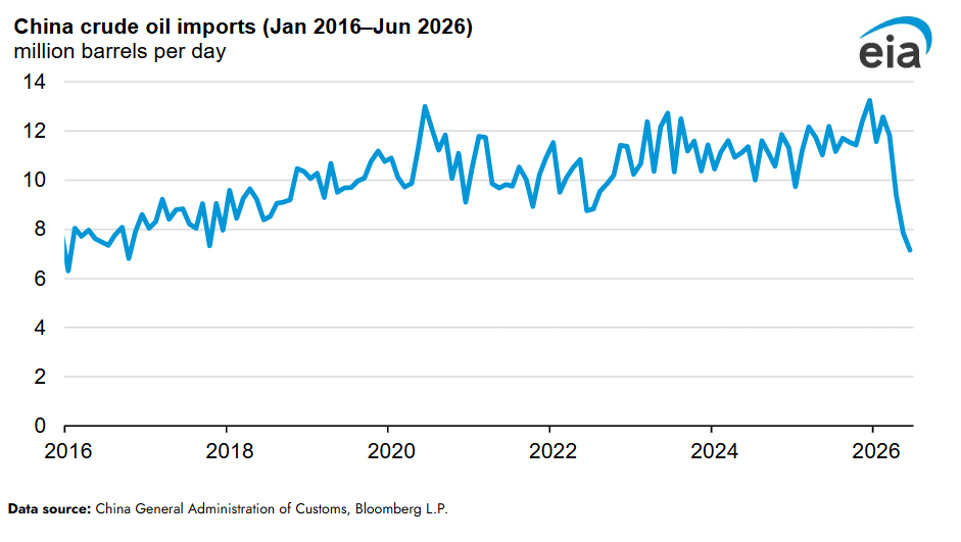
For energy markets, the timing is significant. As supply disruptions in the Middle East sparked concerns over global crude availability, reduced Chinese buying helped soften the impact by lowering overall demand.
While geopolitical developments remain a key driver of volatility, Chinese import activity is becoming an equally important indicator for crude markets. If current import trends persist, softer Chinese demand could continue offsetting some of the supply-side risks that have supported prices throughout the year, particularly as OPEC + restores production and global export flows normalize.
East Coast Diesel Inventories Improve, but Regional Supply Remains Historically Tight
- PADD 1 distillate inventories increased by 3.0 million barrels in the last week of July to 25.2 million barrels.
- Despite the build, inventories remain 8.8% below year-ago levels and nearly 28% below 2024 levels.
- As refinery maintenance season and harvest demand approach, diesel fundamentals remain more supportive than recent crude oil movements suggest.
For fuel buyers, the recent inventory build does not fully eliminate concerns surrounding regional diesel availability. The East Coast remains heavily dependent on product flows from the Gulf Coast and other supply regions, leaving local markets sensitive to refinery outages, transportation disruptions, and shifts in seasonal demand.
Looking ahead, market participants will begin shifting their attention toward two important seasonal factors: harvest demand and refinery maintenance season. Agricultural diesel consumption typically increases across Midwest and some East Coast markets during late summer and early fall, while refinery turnarounds can temporarily reduce production and limit supply flexibility. Although these events occur annually, they become more significant when inventories start from relatively lean levels.
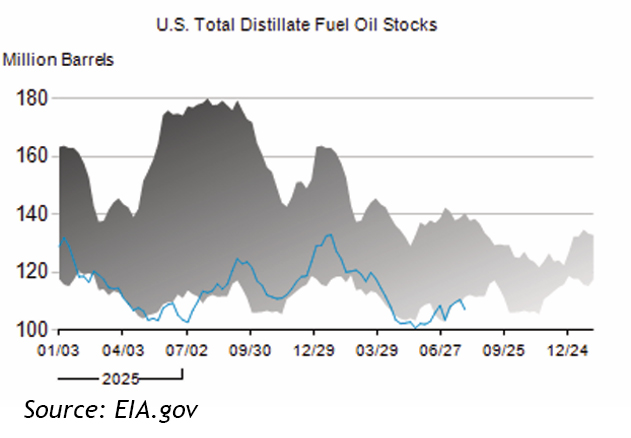
East Coast distillate inventories have improved in the last week of July, but regional stock levels remain historically tight as the market approaches both harvest demand and refinery maintenance season. For fuel buyers, diesel market fundamentals are likely to remain more influential than headline crude price movements through the remainder of Q3.
Sources:
- Energy Information Administration (EIA)
- OPEC +
- MSN
- S&P Platts