- Iran Says No Progress Made in Talks
- Massive Crude Inventory Draw Confirmed – June 3
- Gasoline Inventories Have Fallen for 15 Consecutive Weeks
- IEA Warns Global Inventories Could Reach Critical Levels
- Senate Pushes Toward Permanent Nationwide E15 Sales
Iran Says No Progress Made in Talks
- U.S.-Iran Peace Talks Stall as Regional Tensions Remain Elevated
- Hezbollah Rejects Israel-Lebanon Ceasefire, Threatening Broader Diplomatic Progress
Efforts to negotiate an end to the conflict between the U.S. and Iran showed little progress this week, with Iran’s foreign minister stating that no meaningful breakthroughs have been achieved despite ongoing communication between the two sides. At the same time, Hezbollah rejected a U.S.-backed ceasefire agreement between Israel and Lebanon, raising concerns that renewed fighting could undermine broader regional peace efforts.
The continued clashes in Lebanon and uncertainty surrounding negotiations have complicated diplomatic efforts, leaving energy markets and geopolitical observers focused on the risk of further escalation across the Middle East.
Massive Crude Inventory Draw Confirmed
- U.S. Crude Inventories Post Larger-Than-Expected Draw Amid Strong Export Demand
- Gasoline and Distillate Stocks Rebound Ahead of Peak Summer Driving Season
The latest EIA report showed U.S. crude oil inventories fell by 8 million barrels last week, significantly exceeding analyst expectations as strong export demand and elevated refinery activity continued to tighten crude supplies. In contrast, distillate stocks rose by 1.5 million barrels.
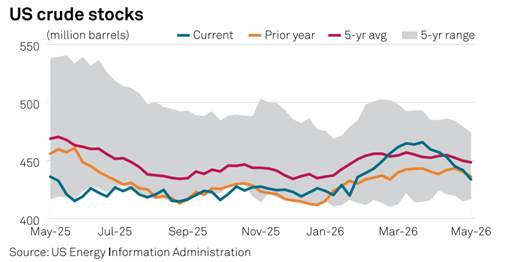
The crude draw highlights ongoing strength in domestic and international demand, while rising refined product inventories suggest refiners are successfully increasing output. The mixed inventory data reflects a market balancing strong crude demand with improving fuel availability.
Gasoline Inventories Have Fallen for 15 Consecutive Weeks
- U.S. Gasoline Inventories Near Lowest Seasonal Levels Since 2014
- Strong Summer Demand and Export Pull Raise Risk of Further Price Increases
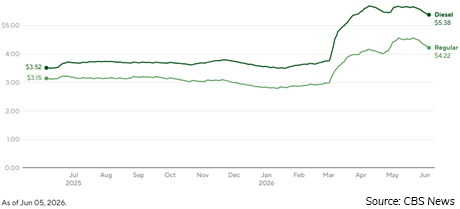
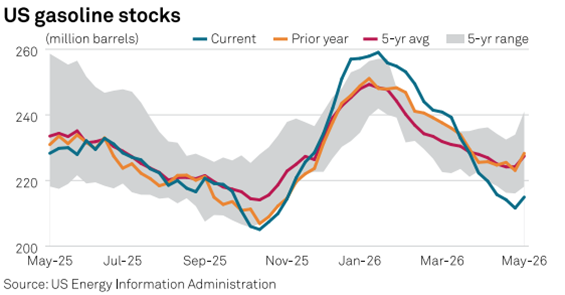
The U.S. gasoline market is entering the peak summer driving season with inventories under significant pressure after 15 consecutive weeks of stock draws, leaving supplies at their lowest seasonal level in more than a decade. Strong domestic demand, elevated exports, and disruptions to global oil flows tied to Middle East tensions have tightened the market and pushed gasoline prices near four-year highs. While refiners have increased utilization rates to boost production, strong international demand may limit inventory rebuilding. Further stock declines could increase the risk of additional price volatility throughout the summer.
IEA Warns Global Inventories Could Reach Critical Levels
- OPEC+ Expected to Increase July Production Despite Strait of Hormuz Disruptions
- Producers Aim to Balance Tight Supply Concerns with Market Share Objectives
OPEC+ is expected to approve another production increase for July as the group continues its strategy of gradually restoring previously curtailed output. The decision comes despite disruptions to shipping through the Strait of Hormuz, a key transit route for global oil exports, which has heightened concerns about supply security. Sources indicate major producers remain focused on maintaining market share and responding to strong global demand while monitoring geopolitical risks. The planned increase could help offset some supply tightness, though ongoing regional tensions continue to pose a risk to oil prices and market stability.
Senate Pushes Toward Permanent Nationwide E15 Sales
- Nationwide E15 Expansion Faces Critical Senate Test Despite House Approval
- Biofuel Advocates Seek Must-Pass Legislation as Refinery Concerns Threaten Passage
Legislation that would permanently allow year-round sales of E15 gasoline nationwide is facing a challenging path in the Senate despite recent House approval. Supporters, including ethanol producers and agricultural groups, argue the measure would expand fuel supply, lower consumer costs, and boost ethanol demand.
However, disagreement over protections for small refiners and Renewable Fuel Standard compliance costs continues to divide lawmakers. With insufficient support to overcome a filibuster, backers are exploring opportunities to attach the proposal to larger must-pass legislation, making the outcome a key issue for both biofuel and refining markets.
Sources:
- Energy Information Administration (EIA)
- Trading Economics
- GasBuddy
- CBS News
- IEA
- Fox Business
- Platts